Datça, Muğla
Datça
Neden Git
For genuine tranquility, uncrowded ancient sites like Knidos, the beauty of the almond blossom, swimming in crystal-clear coves, and experiencing a working Turkish town by the sea.
Neden Gitme
If you need vibrant nightlife, all-inclusive resorts, luxury shopping, guaranteed sunshine in winter, or easy access from an airport. The winding road is long and tiring.
Pazar Takibi
Live DataNe Zaman Gitmelisiniz?
Sezonluk AnalizDestination Analysis
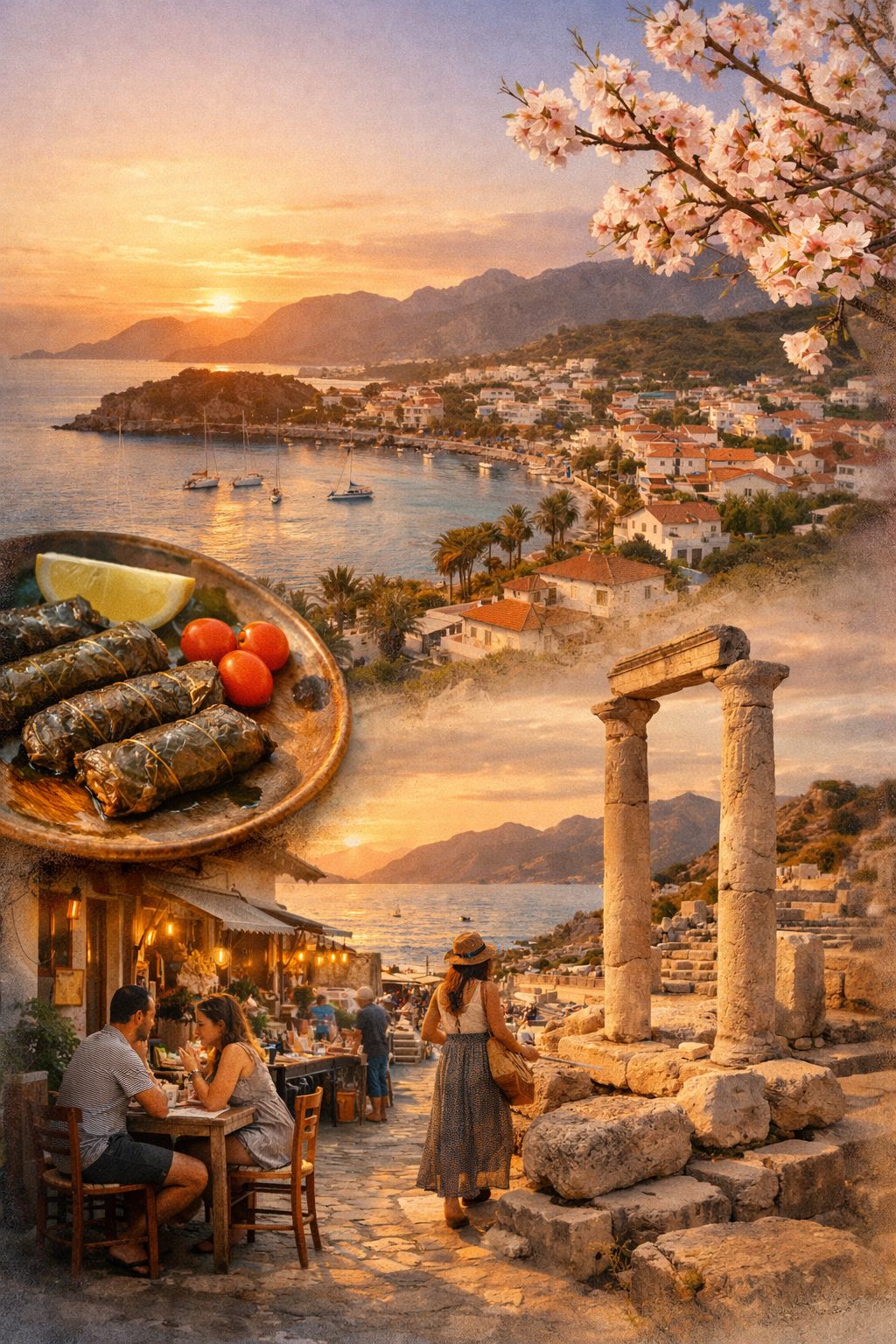
Radical Honesty SeriesDatça sits at the tip of a long, mountainous peninsula in southwest Turkey, a place defined by its isolation. This geography has spared it from the mass tourism that engulfs nearby Bodrum and Marmaris, preserving a distinct, unhurried rhythm of life. The main town, Datça (or Reşadiye), is a working Turkish town with a charming harbor, while the surrounding hills are dotted with stone villages, ancient sites like Knidos, and hundreds of tiny coves accessible only by boat or rough roads. Life here revolves around the seasons: the almond blossom in January, the quiet spring, the crowded but still calm summer, and the profound stillness of winter.
Seasonal Realities
Spring (March-May): The Perfect Window
This is Datça at its most idyllic. The hillsides are green and wildflowers bloom. Temperatures are perfect for hiking the old caravan trails or renting a car to explore the peninsula's dirt roads to remote bays like Hayıtbükü or Palamutbükü. The sea is still too cold for most to swim, but the atmosphere is tranquil, and accommodation prices are at their most reasonable. You'll share the roads with local farmers and a trickle of European hikers, but you'll often have ancient sites like Knidos almost to yourself.
Summer (June-August): The Controlled Chaos
July and August bring the crowds, but it's a relative term. The narrow peninsula road gets busy, the harbor restaurants fill up, and you'll need to book accommodation well in advance. The vibe shifts to a laid-back, family-oriented beach holiday. The famous 'blue cruise' gulets pack the coves, but the sheer number of inlets means you can still find a secluded spot if you have your own boat or are willing to hike. The main town's promenade buzzes pleasantly, but it lacks the super-club energy of Bodrum. Those expecting a party will be disappointed.
Autumn (September-October): The Golden Calm
September is essentially an extension of summer with better temperatures and thinner crowds. The water is at its warmest. October sees a rapid decline in visitors. Local cafes begin to close for the season, and the sea becomes a mirror. This is the time for long, contemplative walks, fresh olives and pomegranates, and experiencing the local harvest. It's a photographer's dream as the light softens over the pine-clad hills.
Winter (November-February): The Local Life
Datça hibernates. Most tourist facilities shut down, and the population shrinks significantly. The weather is rainy and windy, but punctuated by stunningly clear, crisp days. This is the real Datça: where you'll find men playing backgammon in tea gardens and the famous local almonds are in blossom in January. It's for the true seeker of solitude, not for anyone wanting services or reliable sunshine. Many roads to remote villages become impassable.
Datça's charm is its quiet authenticity, but this comes with trade-offs. It's not a place for luxury shopping, international fine dining, or vibrant nightlife. The infrastructure is basic, the airport transfers are long, and the main road is winding and slow. The reward is a genuine connection to the Turkish Aegean coast, a place that still feels discovered.
The isolation is the main draw and the main drawback. It's perfect for those who want to disconnect but requires patience for travel. Summer is busy but never frantic like other Aegean resorts.