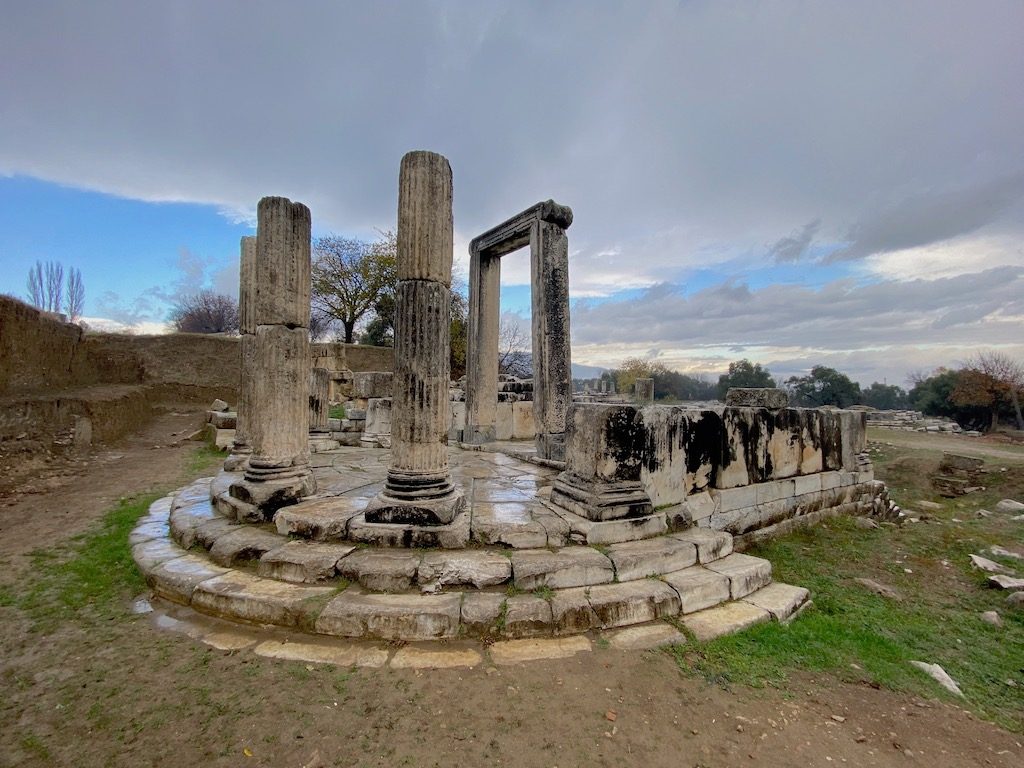
Witness one of the most significant and atmospheric cult centers of the Hellenistic world, with an exceptionally well-preserved temple and unique insights into ancient mystery religions.
Those seeking fully reconstructed or highly interactive museum experiences, as the site is primarily atmospheric ruins with minimal modern amenities.
- Combine with a visit to nearby Stratonikeia for a full ancient history experience
- Wear a hat and sturdy footwear as shade is limited
- Bring your own water as facilities are minimal
Spring and fall offer mild temperatures ideal for exploring the exposed archaeological site.
About Hekateion
The Hekateion at Lagina: The Cult of the Dark Goddess You’ve Never Heard Of
Let’s get one thing straight: you didn’t come to this corner of Turkey for the crowds. There are no souvenir stalls hawking plastic Trojan horses. No tour buses idling in a freshly paved lot. What you’ll find at the Hekateion—the sanctuary of Hekate in ancient Lagina—is something increasingly rare in the Mediterranean: an archaeological site that feels undiscovered.
Situated about 30 minutes inland from the tourist-swamped Aegean coast, this isn’t a place you stumble upon. You drive through the modern town of Turgut, past dusty olive groves and the occasional bewildered goat, until the road dead-ends at a fence. Beyond it, rising from a gentle hillside, stands one of the most significant—and overlooked—cult centers of the Hellenistic world.
What It Is
Forget the temple of Apollo at Didyma or the ruins of Ephesus for a moment. Lagina was the religious heart of the region of Caria, and its crown jewel was this sanctuary dedicated to Hekate. While the Romans later turned Ephesus into a commercial powerhouse, Lagina was where the real spiritual business happened.
The star attraction is the Temple of Hekate itself. Unlike most ancient temples that exist as a handful of columns and a rubble pile, this one stands with remarkable dignity. Built in the 2nd century BCE, its Corinthian columns still frame a sky that hasn’t changed in two millennia. But the real treasure is what you won’t see if you’re just strolling through: the intricate friezes that once wrapped around the temple.
Most of the best ones have been carted off to the Istanbul Archaeological Museum, but the onsite copies (and the originals left in situ) depict a wild cast of characters—gods, giants, and ritual scenes that offer a rare window into the mystery cult of Hekate. This wasn’t your standard Greek religion. Hekate was the goddess of crossroads, magic, ghosts, and liminal spaces. People came here for protection, for necromancy, and for initiation into rites that promised a better afterlife. It was the ancient equivalent of a pilgrimage site for people who wanted to get their hands dirty with the supernatural.
Why It Matters
You come to Lagina not for a photo op, but for context. This site explains how ancient Anatolian religion actually functioned. It wasn’t just Zeus and Athena; it was chthonic (underworld) cults, local deities, and a complex hierarchy of priests and priestesses who wielded enormous power.
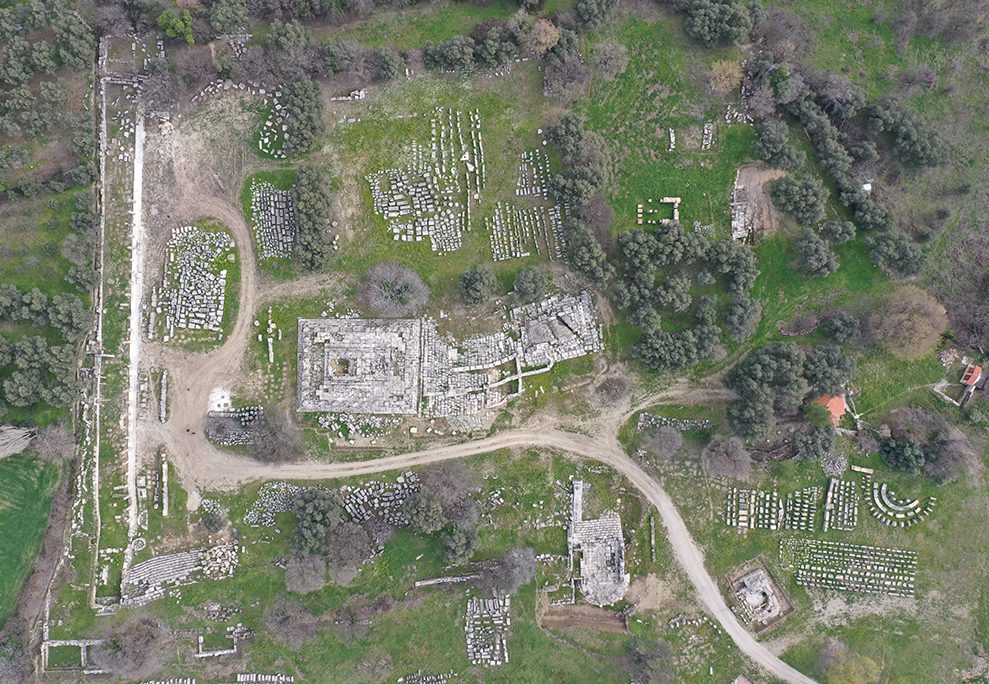
The sanctuary also features a monumental altar and a propylon (a grand gateway), and the entire site is laid out in a way that choreographed the religious experience. You’d process in, make your offerings, and witness rituals that were designed to put the fear of the gods—or the hope of salvation—into you. Walking it today, with the wind rustling through the wild thyme and the only sound being your own footsteps, you can still feel that intentionality.
Best Time to Visit
April to June and September to October are your windows. The site sits on an open slope with zero shade. In July and August, the sun here is a merciless white orb that will bake you into a dry, cranky husk within 20 minutes. The Aegean coast might be a beach party in August, but Lagina is an archaeological oven.
Aim for a morning visit, ideally arriving when the gate opens. The light is better for photography (the columns catch a soft glow), and the heat hasn’t yet turned the site into a sauna. Afternoon visits in the shoulder seasons are pleasant, but the golden hour just before sunset casts long shadows across the altar that genuinely evoke the site’s eerie, ancient purpose.
Practical Tips
First, the basics: there’s a small entrance fee, payable in cash (Turkish Lira). Bring water. I cannot stress this enough. There is no cafe, no shop, not even a shaded bench in the immediate vicinity of the temple itself. There’s a basic toilet near the entrance, but manage your expectations.
Wear shoes with grip. The marble steps and the path around the altar are worn smooth and are treacherously slick, even when dry. One wrong step on a polished stone from 200 BCE and you’ll be making a very personal acquaintance with the local medical infrastructure.
A guide is genuinely worthwhile here. The signage is minimal. Without a knowledgeable local guide—or a deep pre-read on Carian religious history—the site can appear as “just another pile of rocks.” With context, it becomes a stage for ancient magic.
What Nobody Tells You
Here’s the honest truth: Lagina is not a “fun” day out. It is a site for the intellectually curious and the spiritually patient. If your travel style is “I want to see the thing and take the picture,” you will be underwhelmed. The temple is complete enough to be impressive, but the surrounding ruins require imagination.
What most guides won’t tell you is that the modern town of Turgut, which surrounds the site, is a living village. You are not walking through a sterile archaeological park. As you approach the sanctuary, you pass houses, a school, and the local mosque. The ancient propylon (monumental gate) literally stands adjacent to a residential street. There’s a charming cognitive dissonance: children kick soccer balls against walls that once held reliefs of Hekate.
Also, because this is a working village, access can sometimes be oddly restricted. Religious holidays or local events might see the site closed without any notice online. It’s wise to ask your accommodation or a local guide in nearby Muğla to confirm it’s open before driving out.
Finally, manage your expectations about “vibes.” People often come expecting a dark, mystical, witchy atmosphere because of Hekate’s modern resurgence in pop culture and neopaganism. The reality is a bright, sun-drenched field with ruins. The mystery is in the history, not in a lingering fog. You won’t feel a “presence” unless you bring your own imagination.
Combine your visit with Stratonikeia, the “City of Gladiators,” just a 15-minute drive away. It’s a massive, living archaeological site where excavation is ongoing, and together they form one of the most underrated historical double-features in Turkey. But that’s a story for another article.
Gallery
Find destinations near Hekateion.