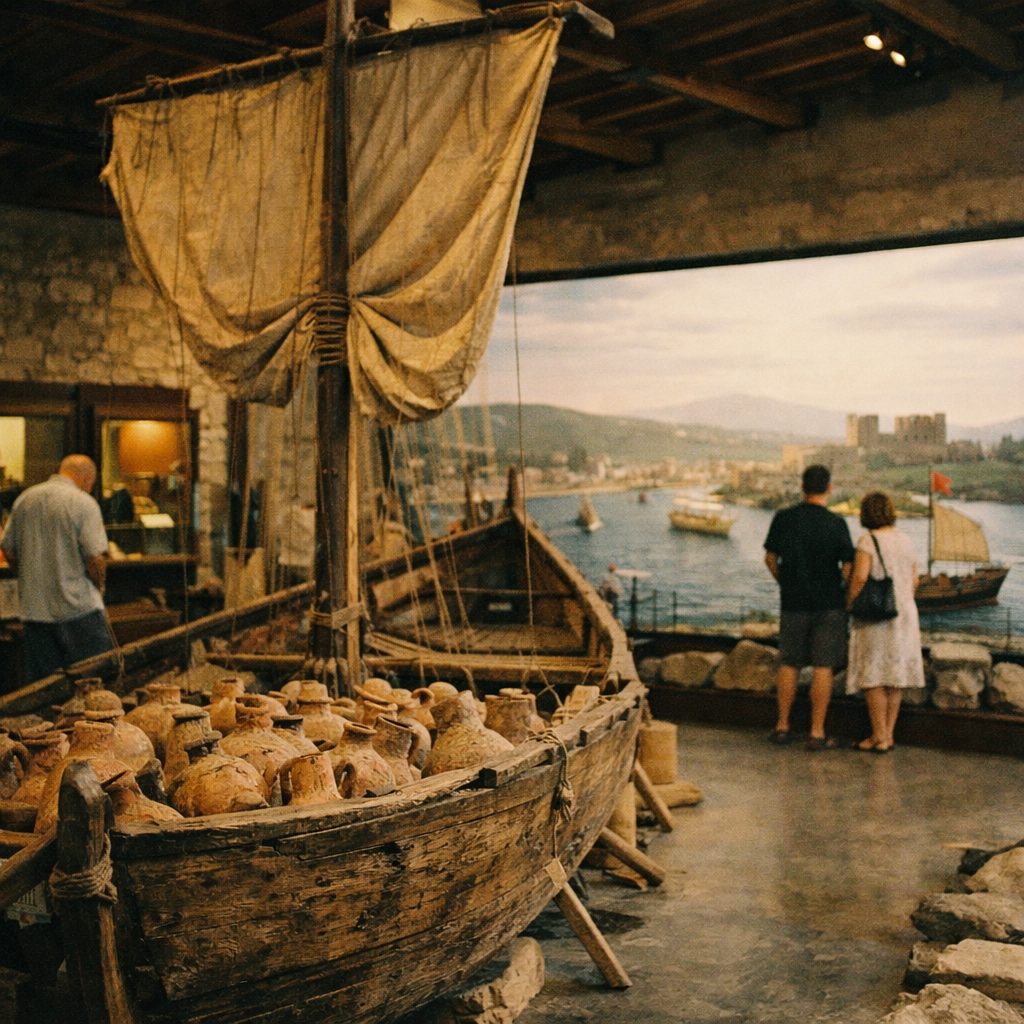
To see the world's only preserved example of a traditional sponge-diving vessel, the 'Alemancı', and gain a deep appreciation for Bodrum's enduring connection to the sea.
Those seeking large, high-tech interactive exhibits or who are not interested in detailed maritime and local history.
- Combine your visit with a walk along the Bodrum waterfront
- Check for any temporary exhibitions before your visit
- Carry a hat and water, especially in warmer months
Visit during spring or autumn for pleasant weather; summer can be extremely hot and crowded.
About Bodrum Maritime Museum
The Bodrum Maritime Museum: Sponges, Shipwrecks, and the Sea You Didn't Know
Most people come to Bodrum for the whitewashed nightclubs, the gulet cruises, and the castle. They leave without knowing that the town’s soul isn't in the discos—it’s underwater. Tucked away on a quiet street near the marina, the Bodrum Maritime Museum isn't trying to compete with the big sights. It’s a love letter to a way of life that’s almost gone, and it’s far more interesting than you’d expect from the outside.
What It Actually Is
The museum is housed in a restored 19th-century stone building that used to belong to a sponge merchant. That’s not a coincidence—this museum is basically the Vatican City for sponge diving. The ground floor is dedicated entirely to the sponge harvesters, and it’s the closest you’ll ever get to understanding what it meant to hold your breath 100 feet down while sharks circled.
You’ll see the actual Alemancı, a traditional sponge-diving sailing boat that’s been preserved in its entirety. It’s massive, wooden, and smells faintly of tar and salt. Crawling through it, you realize these guys lived on these boats for months, diving with nothing but a heavy stone, a knife, and insane lung capacity. The displays include the brass helmets and lead boots of the later "skandalopetra" diving gear—suffocatingly heavy equipment that looks like steampunk torture devices.
Upstairs, things shift to model ships. And not just any models—these are painstakingly crafted replicas of everything from ancient Carian warships to Ottoman galleons and modern yachts. If you care about how a lateen sail actually works, you’ll geek out. If you don’t, you’ll still appreciate the craftsmanship.
Why It Matters
Bodrum today is a tourism machine. The museum reminds you that for thousands of years, these people didn't look at the sea and see a vacation. They saw dinner, a paycheck, and a grave. The sponge divers of the Aegean were legendary free divers. They’d go down with a 15-kilo stone, no oxygen, and wrestle sponges off the rocks at 30 meters. The museum doesn't romanticize it—there’s a sobering section on the bends, the deaths, and the eventual collapse of the industry due to disease that wiped out the sponges in the 1980s.
It matters because it’s authentic. It’s not a corporate-funded history lesson. It’s a local effort to keep a culture alive. You’ll see faded photographs of mustachioed men in wool caps grinning on the decks of boats, and you realize these are someone’s grandfathers.
Best Time to Visit
Visit in the morning, ideally between 10:00 AM and 12:00 PM. The museum is small, and cruise ship crowds can clog the narrow aisles in the afternoon.
The best months to be in Bodrum for this are April, May, September, and October. The weather is mild enough that you can enjoy walking there from the waterfront without melting, and the light hitting the old stone building makes for decent photos. Avoid July and August if you can—not because the museum changes, but because the walk there through crowds of sunburned tourists and the oppressive heat will drain the patience you need to read the detailed placards.
Practical Tips
- Give it 90 minutes. You can rush it in 45 if you’re just skimming, but you’ll miss the nuance.
- Entrance is cheap. Bring small change; it’s usually around 5-7 USD equivalent.
- Guided tours aren't really a thing unless you book ahead. The placards are in English and Turkish, and they’re sufficient.
- It’s wheelchair accessible only on the ground floor. The upper floor requires stairs.
- The gift shop is actually decent. They sell natural sponges (the real thing, not the plastic junk) that make great, weird souvenirs.
What Nobody Tells You
Here’s the honest truth nobody puts in the brochures.
First, this museum is not for everyone. If you have zero interest in maritime history or don’t care how a boat is rigged, you will be bored in twenty minutes. It’s a niche collection, lovingly curated, but it’s not a blockbuster. It’s one room of diving gear, one room of boats, and one room of models. That’s it.
Second, the building has no air conditioning. Or at least, not enough to matter. On a scorching July afternoon, it turns into a sauna. The stone keeps it cooler than outside, but it’s stuffy. Go early.
Third, the real story is the sponge disease. Most visitors breeze past the panels about the 1980s sponge blight. Don’t. A single bacterial event wiped out the entire reason this town existed for centuries. It’s a ecological tragedy that forced every single one of those divers to sell their boats and either emigrate or become waiters. The museum is a eulogy for that lost economy.
Finally, look for the personal touches. There’s a small, almost hidden case with a diver’s personal effects—a letter, a pocket watch, a good luck charm. That’s the heart of the place. It’s not about grand naval battles. It’s about men who went underwater with a knife in their teeth because that’s what their fathers did. If that doesn’t interest you, skip it and head to the beach. If it does, this is the best hour you’ll spend in Bodrum.
Gallery
Find destinations near Bodrum Maritime Museum.